

Many parents are amazed when they see children solving large addition, subtraction, multiplication, and division problems in just a few seconds without using a calculator, paper, or even a physical abacus. The secret behind this remarkable skill is called Mental Abacus.
Mental Abacus is one of the most effective brain-training techniques available for children. It combines visualization, concentration, memory, and mathematical thinking to help children perform calculations mentally with speed and accuracy.
While many people think that abacus training is only about learning arithmetic, the reality is much broader. Mental Abacus helps children strengthen important cognitive skills that support success in school and everyday life.
In this guide, we will explore what Mental Abacus is, how it works, why it is effective, and how children can benefit from a structured abacus maths program.
What Is Mental Abacus?
Mental Abacus is an advanced stage of abacus learning where children perform calculations by visualizing an imaginary abacus in their minds.
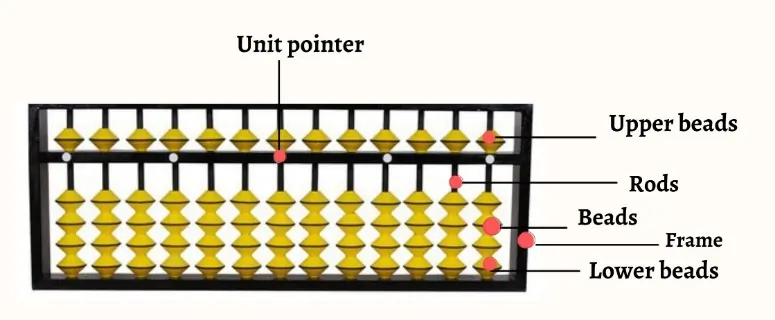
Students begin by learning calculations on a physical abacus. Through regular practice, they become familiar with the position and movement of beads representing numbers.
After sufficient training, children no longer need the physical abacus. Instead, they mentally picture the abacus and move the beads in their imagination while solving mathematical problems.
This process allows them to calculate quickly without relying on:
- Calculators
- Written calculations
- Counting on fingers
- External tools
Mental Abacus transforms arithmetic into a visual thinking process.
The History of the Abacus
The abacus is one of the oldest mathematical tools in human history.
Ancient civilizations in:
- China
- Japan
- India
- Mesopotamia
used different forms of counting devices to perform calculations.
Over time, educators discovered that learning abacus techniques not only improved arithmetic skills but also enhanced concentration, memory, and mental agility.
Today, modern abacus programmes combine traditional abacus techniques with structured mental visualization exercises to develop children’s cognitive abilities.
How Does Mental Abacus Work?
Mental Abacus works through a process called visualization.
Instead of physically moving beads, children imagine the beads moving inside their minds.
For example:
Suppose a child is solving:
245 + 376
A trained Mental Abacus student mentally sees an abacus.
They visualize:
- The starting number
- The movement of beads
- The addition process
- The final bead arrangement
The answer appears from the imagined bead positions.
This mental visualization becomes faster and more accurate with practice.
Understanding Visual Calculation Techniques
One reason Mental Abacus is so powerful is because it uses visual calculation techniques.
Most traditional maths learning relies primarily on:
- Memorization
- Written calculations
- Repetition
Mental Abacus engages the visual imagination.
Children learn to:
- See numbers as images
- Visualize bead movements
- Process information mentally
- Convert abstract numbers into visual patterns
This makes calculations easier and often more enjoyable.
The Stages of Learning Mental Abacus
Mental Abacus is usually taught in several stages.
Stage 1: Understanding Numbers
Children learn:
- Number recognition
- Place value
- Basic counting
This creates a strong mathematical foundation.
Stage 2: Learning the Physical Abacus
Students begin using a physical abacus.
They learn:
- Bead positions
- Addition
- Subtraction
- Number representation
At this stage, children develop familiarity with the tool.
Stage 3: Speed and Accuracy Practice
Children practice calculations repeatedly.
The goal is to:
- Increase speed
- Improve accuracy
- Strengthen confidence
Regular exercises help create automatic responses.
Stage 4: Mental Visualization
Children gradually stop depending on the physical abacus.
Instead, they begin visualizing bead movements mentally.
This is where Mental Abacus truly begins.
Stage 5: Advanced Mental Calculations
Students solve:
- Large additions
- Complex subtractions
- Multiplication
- Division
- Mixed operations
All calculations are completed mentally using visualization techniques.
Why Mental Abacus Is Different from Traditional Maths
Traditional maths often focuses on formulas and written calculations.
Mental Abacus develops:
Visualization Skills
Children create mental images while calculating.
Concentration
Maintaining an imaginary abacus requires strong focus.
Memory
Students remember bead positions and number patterns.
Speed
Calculations become quicker with regular practice.
Confidence
Children gain confidence as their mental maths skills improve.
Benefits of Mental Abacus for Children
1. Improves Concentration
Mental Abacus requires children to maintain focus throughout calculations.
Even small distractions can interrupt the visualization process.
As a result, students naturally develop stronger attention spans.
2. Enhances Memory
Children continuously remember:
- Number positions
- Bead arrangements
- Calculation sequences
This strengthens both short-term and working memory.
3. Develops Visualization Skills
Visualization is one of the most valuable learning skills.
Mental Abacus trains children to create detailed mental images while solving problems.
These skills often transfer to:
- Reading
- Science
- Creative thinking
- Problem-solving
4. Increases Calculation Speed
One of the most visible benefits is faster calculation speed.
Students often solve arithmetic problems significantly faster than traditional methods.
This helps during:
- School tests
- Competitive exams
- Classroom activities
5. Builds Confidence
Success in mental calculations boosts self-esteem.
Children often become more confident when approaching maths-related tasks.
6. Improves Problem-Solving Skills
Mental Abacus encourages logical thinking.
Children learn to:
- Analyze numbers
- Recognize patterns
- Make quick decisions
These skills are useful throughout life.
How Mental Abacus Helps Academic Performance
The benefits of Mental Abacus extend beyond mathematics.
Students frequently show improvement in:
Reading
Better concentration while reading.
Writing
Greater attention to detail.
Science
Improved analytical thinking.
Language Learning
Enhanced memory retention.
Classroom Participation
Increased confidence and engagement.
Common Myths About Mental Abacus
Myth 1: It Is Only for Maths Geniuses
False.
Mental Abacus can be learned by ordinary children with consistent practice.
Myth 2: It Is Too Difficult
False.
Children learn gradually through structured lessons.
Myth 3: Only Young Children Can Learn It
False.
While younger children often learn faster, older students can also benefit from Mental Abacus training.
Myth 4: Calculators Are Better
Calculators provide answers.
Mental Abacus develops the brain.
The goal is not simply getting answers but strengthening thinking skills.
What Age Is Best for Mental Abacus?
Most children begin learning Mental Abacus between:
5 and 14 years of age
This age range is ideal because:
- Brain development is active
- Learning habits are forming
- Visualization skills develop quickly
However, older learners can also benefit from abacus training.
Why Parents Choose Online Mental Abacus Classes
Online learning has made Mental Abacus accessible worldwide.
Benefits include:
- Live interactive classes
- Learning from home
- Flexible schedules
- Individual attention
- International curriculum
- Regular progress monitoring
Children can develop strong mental maths skills regardless of location.
How to Choose the Right Abacus Maths Program
When selecting an abacus maths program, parents should consider:
Qualified Teachers
Choose experienced instructors who understand child psychology and learning styles.
Structured Curriculum
Look for progressive learning levels.
Interactive Lessons
Engaging classes help maintain motivation.
Regular Practice
Consistent practice is essential for success.
Student Progress Tracking
Parents should receive updates on improvement and performance.
Why Mental Abacus Is More Than Fast Maths
Many parents initially join an abacus programme hoping to improve their child’s arithmetic skills.
However, they often discover additional benefits such as:
- Better concentration
- Improved memory
- Enhanced confidence
- Stronger visualization skills
- Faster thinking
- Better academic performance
Mental Abacus acts as a complete brain development programme rather than simply a maths course.
Frequently Asked Questions
What is Mental Abacus?
Mental Abacus is a method of performing calculations by visualizing an imaginary abacus and moving beads mentally instead of using a physical tool.
Is Mental Abacus good for children?
Yes. It helps improve concentration, memory, visualization, confidence, and calculation speed.
At what age should children start Mental Abacus?
Most children start between 5 and 14 years of age.
Does Mental Abacus improve school maths?
Yes. Students often become more confident and efficient when solving mathematical problems.
How long does it take to learn Mental Abacus?
Results vary, but many children begin showing noticeable improvement within a few months of regular practice.
Conclusion
Mental Abacus is a powerful educational method that transforms arithmetic into a visual and engaging mental activity. By teaching children to visualize and manipulate an imaginary abacus, this unique approach strengthens concentration, memory, visualization, calculation speed, and problem-solving skills.
Unlike traditional methods that focus only on obtaining answers, Mental Abacus trains the brain itself. The skills developed through regular practice often support success across many academic subjects and everyday activities.
For parents seeking a proven way to improve their child’s mental maths abilities while also developing important cognitive skills, a structured Mental Abacus programme can be an excellent investment in their child’s future learning journey.
About the Author
Niral Devnath is an experienced educator and founder of Easy Teach Academy. With over 15 years of teaching experience, he specializes in Abacus, Mental Maths, Vedic Maths, English Grammar, and international curriculum support. Through interactive online classes, he helps students worldwide build confidence, concentration, and strong academic foundations.


Excellent article on “What Is Mental Abacus and How Does It Work? A Complete Guide for Parents” published on Easy Teach Academy (https://easyteachacademy.com/).
I found this article extremely informative, engaging, and valuable for parents who want to understand how Mental Abacus can positively impact their children’s learning and overall cognitive development. The topic has been explained in a very clear and structured manner, making it easy for readers to understand not only what Mental Abacus is but also why it is considered one of the most effective brain-training methods for children today.
What impressed me most was the detailed explanation of how Mental Abacus transforms traditional arithmetic into a visual thinking process. The concept of children visualizing an imaginary abacus and mentally moving beads to solve calculations is fascinating. It demonstrates how mathematics can become more interactive, enjoyable, and intellectually stimulating rather than simply relying on memorization or repetitive written calculations.
I particularly appreciated the section explaining the various stages of learning Mental Abacus. From understanding numbers and using a physical abacus to eventually performing advanced mental calculations through visualization, the learning journey has been described exceptionally well. This helps parents understand that Mental Abacus is a gradual and structured process designed to build confidence, accuracy, and speed over time.
Another important aspect highlighted in the article is the wide range of cognitive benefits associated with Mental Abacus training. The improvement in concentration, memory, visualization skills, problem-solving abilities, and self-confidence shows that Mental Abacus is much more than a mathematics program. It is a complete brain development system that equips children with essential skills that support success in academics and everyday life.
The discussion about common myths was also very helpful. Many parents believe that Mental Abacus is only for exceptionally gifted children or that it is too difficult to learn. This article effectively clarifies these misconceptions and explains that any child can benefit from Mental Abacus with proper guidance, regular practice, and a structured curriculum.
I also appreciate how Easy Teach Academy emphasizes the long-term educational benefits of Mental Abacus. The connection between visualization, concentration, memory retention, and academic performance is clearly explained. It is encouraging to learn that the skills developed through Mental Abacus can improve not only mathematics but also reading, writing, science, language learning, and classroom participation.
The information about online Mental Abacus classes is particularly relevant in today’s world, where flexible and accessible learning options are increasingly important. The focus on qualified teachers, interactive lessons, progress tracking, and personalized learning demonstrates a strong commitment to helping students achieve their full potential.
Thank you for publishing such a comprehensive and insightful guide. Articles like this help parents make informed educational decisions and better understand the value of developing cognitive skills from an early age. I highly recommend that parents, teachers, and students visit https://easyteachacademy.com/ to explore the excellent educational programs and resources available.
Looking forward to reading more high-quality educational content from Easy Teach Academy in the future.
— Arnav Devnath