The Modern Challenge: Why Children Struggle to Focus Today

Many parents notice that their children find it difficult to stay focused on studies for long periods. With smartphones, tablets, television, video games, and social media competing for attention, children are exposed to constant distractions throughout the day.
Teachers often report that students:
- Lose concentration quickly during lessons
- Make careless mistakes
- Forget instructions
- Struggle to complete homework independently
- Become frustrated with problem-solving tasks
Developing concentration has become more important than ever. Children who learn to focus effectively are generally better equipped to succeed academically and manage everyday challenges.
One educational tool that has consistently helped children improve concentration is Abacus Maths Training.
Understanding How the Brain Learns
The human brain develops rapidly during childhood. During these important years, children build neural pathways that influence memory, learning, concentration, creativity, and problem-solving skills.
Activities that require active thinking help strengthen these neural connections.
Abacus learning is unique because it combines:
- Visual learning
- Auditory learning
- Kinesthetics learning
- Memory training
- Logical thinking
This multi-sensory approach keeps children actively engaged and helps train the brain to maintain attention for longer periods.
Why Abacus Is Different from Traditional Maths Learning
Traditional maths often relies heavily on paper, calculators, and written methods.
Abacus learning requires children to:
- Visualize numbers
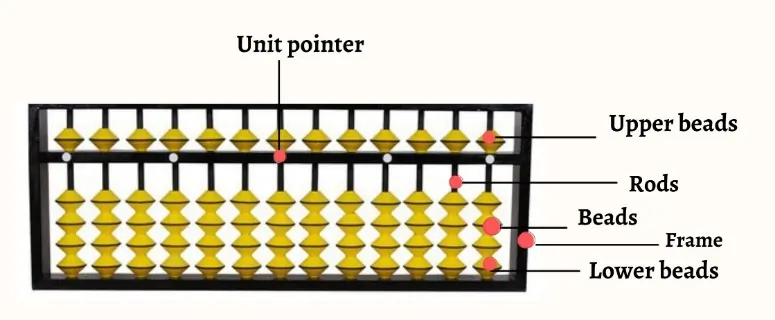
- Move beads accurately
- Listen carefully
- Perform mental calculations
- Remember number positions
Because multiple mental processes occur simultaneously, children must remain focused throughout the activity.
This continuous engagement naturally strengthens concentration skills.
How Mental Abacus Strengthens Focus
After learning the physical abacus, students gradually move to Mental Abacus.
Mental Abacus involves visualizing an imaginary abacus inside the mind.
For example:
Instead of using physical beads, a child mentally imagines moving beads while calculating:
- 345 + 289
- 768 – 294
- Multiplication calculations
- Division calculations
To perform these calculations successfully, children must maintain complete attention.
Even a small distraction can cause them to lose track of the bead movements.
This repeated mental exercise acts like a workout for the brain.
The Science Behind Abacus and Concentration
Educational researchers have found that abacus training engages several regions of the brain simultaneously.
These include:
Visual Processing Areas
Children visualize bead positions and movements.
Memory Centers
Children remember numerical values and bead arrangements.
Attention Networks
Children focus on instructions and calculations.
Motor Coordination Areas
Children move beads accurately using their fingers.
The combined use of these brain functions encourages stronger cognitive development and improved concentration skills.
How Abacus Improves Classroom Performance
Children who develop stronger concentration often perform better in school because they can:
Listen More Carefully
Students become better at following teacher instructions.
Complete Work Faster
Improved focus helps reduce time spent on assignments.
Make Fewer Mistakes
Concentration reduces careless errors.
Stay Engaged During Lessons
Children can maintain attention throughout classroom activities.
Improve Test Performance
Focused students often perform more effectively during examinations.
Building Patience Through Abacus Training
One overlooked benefit of abacus learning is patience.
Children initially learn:
- Number recognition
- Basic bead movement
- Addition
- Subtraction
As they progress, they tackle:
- Multiplication
- Division
- Mental calculations
- Speed-building exercises
This gradual progression teaches children:
- Persistence
- Self-discipline
- Patience
- Consistency
These qualities contribute directly to improved concentration.
How Abacus Reduces Dependence on Calculators
Many children rely heavily on calculators for simple calculations.
Abacus encourages children to:
- Think independently
- Solve problems mentally
- Develop number sense
- Improve calculation confidence
This active involvement keeps the brain engaged and focused.
Long-Term Benefits of Improved Concentration
The concentration skills developed through abacus training extend far beyond mathematics.
Children often experience improvements in:
Reading
Better focus while reading passages.
Writing
Improved attention when completing written assignments.
Science
Enhanced observation and analytical skills.
Language Learning
Improved memory and listening abilities.
Daily Activities
Better organization and task completion.
How Parents Can Support Concentration Development at Home
Parents play an important role in helping children strengthen focus.
Here are some practical tips:
Create a Dedicated Study Space
Choose a quiet location free from distractions.
Limit Screen Time
Reduce unnecessary exposure to digital distractions.
Encourage Daily Abacus Practice
Even 15–20 minutes per day can produce significant benefits.
Maintain Consistency
Regular practice builds stronger concentration habits.
Celebrate Progress
Recognize effort and improvement rather than focusing only on results.
Why Online Abacus Classes Are Effective
Modern online abacus classes provide children with structured learning from home.
Benefits include:
- Live interactive lessons
- Individual attention
- Flexible scheduling
- International curriculum
- Regular practice sessions
- Progress tracking
Children can develop concentration and mental maths skills without travelling to physical learning centres.
Explore Our International Online Abacus Programmes
If you are looking for quality online abacus training, explore our specialized programmes:
Finland Students
Australia Students
Singapore Students
United Kingdom Students
These programmes are designed to help children improve concentration, mental maths abilities, confidence, and academic performance.
Success Story: How Improved Focus Changes Learning
Many parents initially join abacus classes because their children struggle with mathematics.
However, after several months, they often report additional improvements such as:
- Better attention in school
- Improved memory
- Faster homework completion
- Greater self-confidence
- Enhanced problem-solving skills
These benefits demonstrate that abacus training develops much more than mathematical ability.
About Easy Teach Academy
At Easy Teach Academy, we provide interactive online Abacus, Mental Maths, Vedic Maths, and English learning programmes for students worldwide.
Under the guidance of Niral Devnath, who has more than 15 years of teaching experience, students receive personalized instruction that helps them build strong academic foundations while developing essential cognitive skills such as concentration, memory, and logical thinking.
Final Thoughts
In an age filled with distractions, concentration has become one of the most valuable skills a child can develop. Abacus Maths offers a practical and engaging way to strengthen attention, improve memory, enhance mental calculation abilities, and build confidence.
The benefits of abacus extend far beyond mathematics. Through regular practice, children learn to focus more effectively, think independently, solve problems confidently, and develop lifelong learning habits that support success both inside and outside the classroom.
For parents searching for an effective way to improve focus in children while strengthening mathematical skills, Abacus Maths remains one of the most powerful educational tools available today.