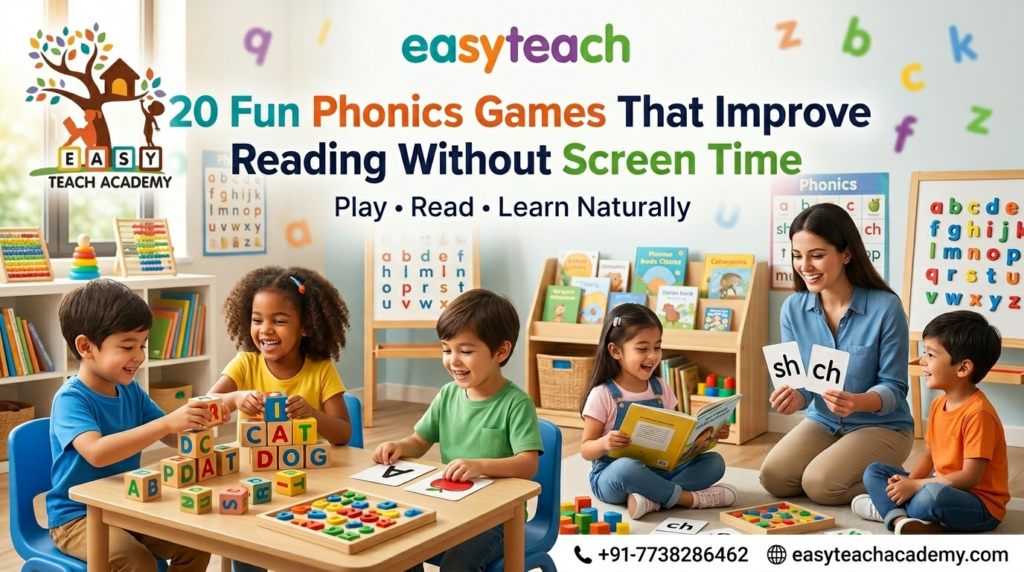
Many parents worry about how much time their children spend looking at screens. Tablets, phones, televisions, and computers have become part of everyday life, but reading development still depends on something much more powerful—real interaction.
Children learn language best when they listen, speak, move, touch, explore, and play. While educational apps may introduce letters and sounds, they cannot fully replace meaningful experiences that allow children to actively engage with words.
This is why screen-free learning continues to be one of the most effective ways to build strong literacy foundations. Children who participate in hands-on phonics games, storytelling activities, and word exploration often develop stronger reading habits and greater confidence than children who only practice through digital devices.
Whether you are teaching a preschool child, supporting a beginning reader, or looking for fresh ideas for homeschooling phonics, this guide will provide twenty original activities that transform ordinary moments into powerful learning opportunities.
Parents seeking professional support can also explore:
🌐 https://easyteachacademy.com/
📚 https://easyteachacademy.com/best-online-phonics-classes-for-kids-and-adults/
Why Children Learn Better Through Play
Think about how children learn to speak.
Nobody hands a toddler a worksheet.
Instead, children learn through:
- conversations
- listening
- repetition
- observation
- exploration
Reading develops in a similar way.
When children interact with sounds and words through play, they naturally strengthen:
- phonics sounds
- vocabulary
- listening skills
- memory
- sentence formation
- confidence
Effective literacy instruction goes beyond recognizing words—it encourages children to explore, question, and enjoy the power of language.
The Secret Behind Successful Readers
Strong readers are not created overnight.
Before children read books independently, they usually develop several important abilities:
- hearing sounds within words
- recognizing patterns
- identifying letters
- understanding spoken language
- connecting sounds with print
Programs such as Jolly Phonics and Hooked on Phonics Kindergarten focus on these foundational skills because they create the building blocks for future reading success.
The activities below strengthen those foundations in enjoyable and memorable ways.
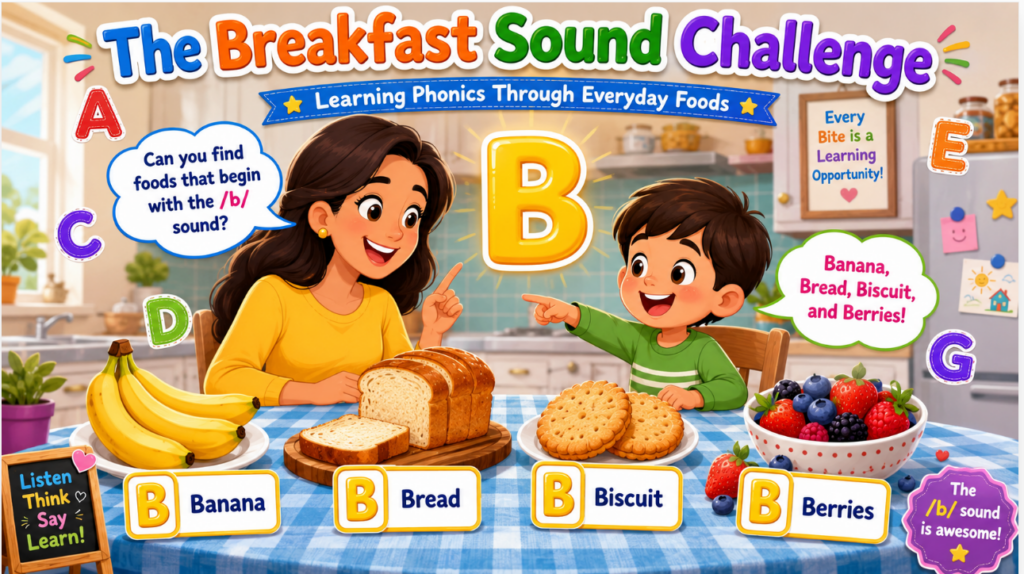
1. The Breakfast Sound Challenge
Breakfast provides a perfect opportunity for phonics practice.
Choose a target sound for the day.
Example:
Today’s sound = /b/
Ask your child:
“Can you find foods that begin with the /b/ sound?”
Possible answers:
- bread
- banana
- biscuit
- berries
Children quickly discover that sounds are all around them.
2. The Supermarket Sound Explorer
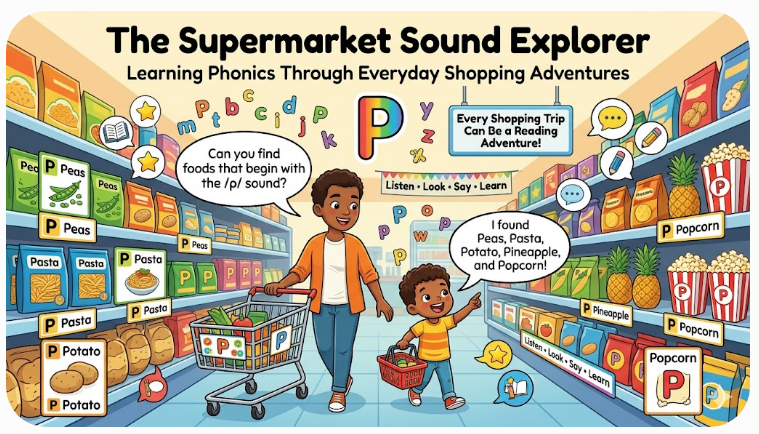
Turn grocery shopping into a reading adventure.
Assign one letter.
Example:
Letter P
Challenge children to find:
- peas
- pasta
- potato
- pineapple
- popcorn
This activity develops observation skills while reinforcing sound recognition.
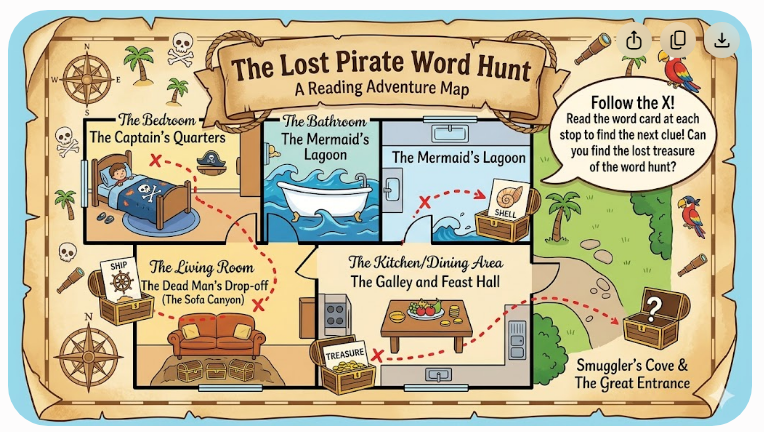
3. The Lost Pirate Word Hunt
Create a treasure map around your home.
Hide word cards in different locations.
Examples:
- shell
- ship
- ocean
- treasure
- captain
Each discovered word leads to the next clue.
Children remain engaged because the learning feels like an adventure rather than a lesson.
4. The Sound Chef Game
Pretend your child is a chef.
Each recipe requires ingredients that begin with a particular sound.
Example:
Sound = /m/
The chef can collect:
- mango
- muffin
- mushroom
- milk
This encourages vocabulary development while strengthening sound awareness.
5. Window Writing Challenge
Use washable markers on windows.
Call out a sound.
Children write words containing that sound.
Example:
Long A sound:
- rain
- train
- paint
- chain
Writing on unusual surfaces makes practice more exciting.
6. Backyard Reading Adventure
Take phonics outdoors.
Ask children to discover objects that match a target sound.
Example:
Sound = /t/
Possible discoveries:
- tree
- twig
- tractor
- toy
Nature becomes the classroom.
7. Mystery Object Box
Place several household objects inside a box.
Children reach in and identify objects by touch.
After naming the object, they identify:
- beginning sound
- ending sound
- number of syllables
This activity combines sensory learning with literacy development.
8. Animal Sound Safari
Create animal cards.
Children sort animals according to beginning sounds.
Example:
/l/
- lion
- leopard
- llama
/s/
- snake
- seal
- shark
Children enjoy learning because animals naturally spark curiosity.
9. The Family Name Challenge
Use family names as learning tools.
Examples:
Mum
Dad
Ava
Noah
Oliver
Discuss:
- first sound
- last sound
- number of letters
Personal connections help children remember concepts more easily.
10. Build a Silly City
Children create an imaginary city where every location begins with the same sound.
Example:
Sound = /s/
Possible places:
- Sunny School
- Silly Supermarket
- Star Stadium
- Singing Station
Creativity and phonics work together.
11. The Secret Spy Game
Children become phonics spies.
Their mission:
Find five objects containing a target sound.
Example:
Sound = /sh/
Possible answers:
- shampoo
- shirt
- shelf
- shoes
- shell
This activity improves listening and word analysis skills.
12. The Robot Talk Challenge
Speak like a robot.
Instead of saying:
“lamp”
Say:
/l/ /a/ /m/ /p/
Children must guess the word.
Then reverse roles.
Children enjoy becoming the robot.
13. Sound Basketball
Place a basket several feet away.
Show a word card.
If the child reads it correctly, they earn a shot.
Example words:
- bright
- cloud
- green
- stone
Physical activity increases engagement.
14. The Detective Notebook
Provide a notebook.
Every day children record five interesting words they discover.
Examples:
- thunder
- bicycle
- popcorn
- rainbow
- elephant
Discuss sounds and patterns found in each word.
Over time, children create their own personal vocabulary collection.
15. The Sound Train Station
Create train tickets containing sounds.
Example tickets:
- ch
- sh
- th
- ee
- ai
Children place words onto the correct train.
Example:
Train “sh”
Passengers:
- shark
- shelf
- ship
- sheep
This visual approach strengthens sound recognition.
16. The Story Starter Jar
Place story prompts inside a jar.
Examples:
- dragon
- moon
- castle
- rainbow
Children choose three cards and create a story.
Storytelling develops vocabulary and supports future reading success.
17. Kitchen Menu Creator
Ask children to create their own restaurant menu.
Example:
The Magic Pancake Café
Menu items:
- banana pancakes
- strawberry shake
- mango muffin
Children practice writing while using imagination.
18. The Sound Photographer
Pretend your child is a photographer.
Using a toy camera or real camera, photograph objects containing a chosen sound.
Example:
Sound = /c/
Photos:
- clock
- cup
- candle
- cookie
Later, create a sound album together.
19. The Reading Race Track
Draw a race track on paper.
Every correctly read word moves the car forward.
Example words:
- sparkle
- mountain
- garden
- sunshine
Children focus on progress rather than mistakes.
20. The Family News Channel
Children become news reporters.
Choose a word.
Example:
volcano
Children create a short news report:
“Breaking news! A volcano has appeared in our backyard. Scientists are investigating the situation.”
This activity develops speaking confidence, vocabulary, and fluency.
How These Activities Improve Reading Beyond Phonics
Many parents focus only on sounding out words.
However, reading success depends on much more than decoding.
Strong readers also:
- understand meaning
- make predictions
- remember information
- ask questions
- connect ideas
These skills are supported through effective reading comprehension strategies.
For example:
After a game, ask:
- Which activity was your favourite?
- Why did you choose that answer?
- What might happen next?
- Can you explain your thinking?
These questions strengthen comprehension and critical thinking.
The Role of Phonics Worksheets
Although games are powerful, phonics worksheets can still play an important role.
The key is balance.
A child might:
Monday:
Play a sound game.
Tuesday:
Complete a worksheet.
Wednesday:
Read a story.
Thursday:
Build words using letter cards.
Friday:
Create their own sentences.
Variety keeps learning fresh and enjoyable.
Supporting Reading During School Holidays
Many children lose reading confidence during long vacations.
This is why parents increasingly look for summer reading skills programs.
You don’t necessarily need expensive courses.
Simple habits can make a huge difference:
- daily reading time
- family storytelling nights
- phonics games
- library visits
- reading challenges
Even fifteen minutes per day can help maintain reading progress.
Why Jolly Phonics Remains Popular
Jolly Phonics continues to be one of the most recognized phonics systems because it combines:
- actions
- songs
- stories
- movement
Children remember information more easily when multiple senses are involved.
The approach turns learning into an experience rather than a lesson.
Understanding Reading Comprehension
Parents often celebrate when children can read words correctly.
However, reading is only truly successful when children understand what they read.
This is where reading comprehension strategies become essential.
Try asking:
“What surprised you in the story?”
“Which character would you like to meet?”
“How would you change the ending?”
Questions like these encourage deeper thinking.
When Reading Comprehension Tutoring May Help
Some children decode words accurately but still struggle to understand stories.
Signs include:
- difficulty retelling events
- forgetting details quickly
- trouble answering questions
- limited vocabulary
Professional reading comprehension tutoring can help children strengthen understanding while building confidence.
Why Parents Are Choosing Online Phonics Support
Many parents search online for:
- phonics classes near me
- reading support programs
- literacy tutoring
Online learning often provides:
- flexible schedules
- one-to-one instruction
- individualized lesson plans
- interactive activities
Parents can explore professional phonics support here:
🌐 https://easyteachacademy.com/
📚 https://easyteachacademy.com/best-online-phonics-classes-for-kids-and-adults/
Frequently Asked Questions
Are phonics games effective?
Yes. Interactive activities help children learn sounds, patterns, and words in memorable ways.
Can phonics games replace worksheets?
Games and worksheets work best when used together.
How often should children practice phonics?
Consistent practice for a few minutes each day often produces better results than infrequent extended study periods.
Do screen-free activities really improve reading?
Yes. Many screen-free activities encourage active participation, deeper thinking, and stronger language development.
Are these activities suitable for homeschooling?
Absolutely. These activities are excellent for homeschooling phonics and can easily be adapted to different ages.
Final Thoughts
Children don’t need endless screen time to become successful readers. Some of the most powerful learning experiences happen during conversations, family games, outdoor adventures, and imaginative play.
These twenty original phonics games transform everyday situations into meaningful learning opportunities. They strengthen phonics sounds, support literacy development, encourage creativity, and build confidence in beginning readers.
Whether you are teaching at home, supporting a school-aged child, or searching for effective reading games for kids, these activities offer practical ways to make reading enjoyable while laying the foundation for lifelong learning.
Help Your Child Become a Confident Reader
Easy Teach Academy offers engaging online phonics lessons designed to strengthen reading confidence, vocabulary development, and literacy skills.
🌐 Website: https://easyteachacademy.com/
📚 Phonics Program: https://easyteachacademy.com/best-online-phonics-classes-for-kids-and-adults/
📞 Phone/WhatsApp: +91-7738286462
Book a trial lesson today and discover how structured phonics instruction can support your child’s reading journey.