Parents play an important role in helping children learn to read. Whether it’s reading bedtime stories, practicing words after school, or helping with homework, everyday interactions contribute to a child’s literacy development.
However, many parents unknowingly make mistakes while supporting reading at home. These mistakes are usually made with good intentions, but they can sometimes slow progress or create confusion.
The challenge is that reading instruction has changed significantly over the years. Modern phonics programs focus on helping children understand sound-letter relationships rather than memorizing words. As a result, some traditional approaches no longer produce the best outcomes.
The good news is that most phonics mistakes are easy to correct once parents understand how children learn to read.
In this comprehensive guide, we’ll explore the 15 most common mistakes parents make when teaching phonics at home, explain why these issues occur, and provide practical solutions that support successful reading development.
Parents looking for professional phonics support can learn more at:
🌐 https://easyteachacademy.com/
📚 https://easyteachacademy.com/best-online-phonics-classes-for-kids-and-adults/
Why Parents Matter in Phonics Learning
Children spend only a portion of their day in school.
Most learning opportunities occur at home.
A simple conversation during dinner, a story before bedtime, or a short reading activity after school can strengthen literacy skills significantly.
Effective phonics learning does not require parents to become professional teachers.
It simply requires understanding a few key principles and avoiding common mistakes.
Mistake 1: Teaching Letter Names Before Letter Sounds
Many parents begin by teaching:
A, B, C, D, E
While letter names are important, young readers benefit more from learning letter sounds first.
For example:
Instead of:
“This is the letter bee.”
Focus on:
“This letter makes the /b/ sound.”
Why It Matters
Children use sounds to decode words.
When reading “bat,” they need:
/b/ /a/ /t/
not
bee-ay-tee
How to Fix It
Introduce sounds alongside letter names.
Practice:
- B says /b/
- M says /m/
- S says /s/
This supports stronger decoding skills.
Mistake 2: Correcting Every Mistake Immediately
Parents often interrupt reading constantly.
Example:
Child:
“The cat sat on the…”
Parent:
“No! That’s wrong!”
Frequent interruptions can reduce confidence.
How to Fix It
Allow children time to think.
Ask:
“Can you try that word again?”
This encourages problem-solving rather than dependence on adult assistance.
Mistake 3: Rushing Through Reading Practice
Some parents believe longer sessions produce better results.
In reality, tired children often learn less effectively.
Example
Twenty minutes of focused practice may produce better outcomes than an hour of frustration.
How to Fix It
Use shorter sessions:
- 10 minutes
- 15 minutes
- 20 minutes
Consistency matters more than duration.
Mistake 4: Guessing Instead of Decoding
Children sometimes rely on pictures rather than words.
Example:
A page shows a horse.
The text says:
“The pony ran across the field.”
The child says:
“Horse.”
The answer sounds reasonable but is incorrect.
Why It Matters
Reading requires attention to print.
How to Fix It
Encourage children to examine sounds within words.
Ask:
“What sound does the word begin with?”
Mistake 5: Focusing Only on Reading Books
Books are important, but children can practice reading everywhere.
Examples include:
- food labels
- shopping lists
- road signs
- menus
- birthday cards
How to Fix It
Turn everyday situations into reading opportunities.
Learning becomes more natural and meaningful.
Mistake 6: Ignoring Vocabulary Development
Some parents focus only on word recognition.
However, understanding vocabulary supports comprehension.
Example
A child may read:
“The explorer entered the cave.”
But not understand the word:
explorer
How to Fix It
Pause occasionally to discuss new words.
Build meaning alongside reading accuracy.
Mistake 7: Comparing Children to Others
Parents sometimes say:
“Your cousin could already read at your age.”
Comparisons can damage motivation.
Every child develops differently.
How to Fix It
Compare progress only against previous performance.
Celebrate growth rather than competition.
Mistake #8: Overusing Worksheets
Many parents believe more worksheets equal more learning.
Worksheets can help, but excessive paper-based practice may reduce engagement.
How to Fix It
Balance worksheets with:
- storytelling
- discussions
- games
- hands-on activities
Children learn through variety.
Mistake 9: Choosing Books That Are Too Difficult
Parents often select books beyond a child’s current level.
The result:
- frustration
- guessing
- avoidance
How to Fix It
Choose books that offer challenge without overwhelming the reader.
Successful reading experiences build confidence.
Mistake 10: Ignoring Listening Skills
Reading begins with listening.
Children who listen carefully often become stronger readers.
Example Activity
Tell a short story.
Ask:
- Who was the main character?
- Where did the story happen?
- What problem occurred?
Listening supports comprehension development.
Suggested Image Placement
Insert Educational Image Here
Image Prompt
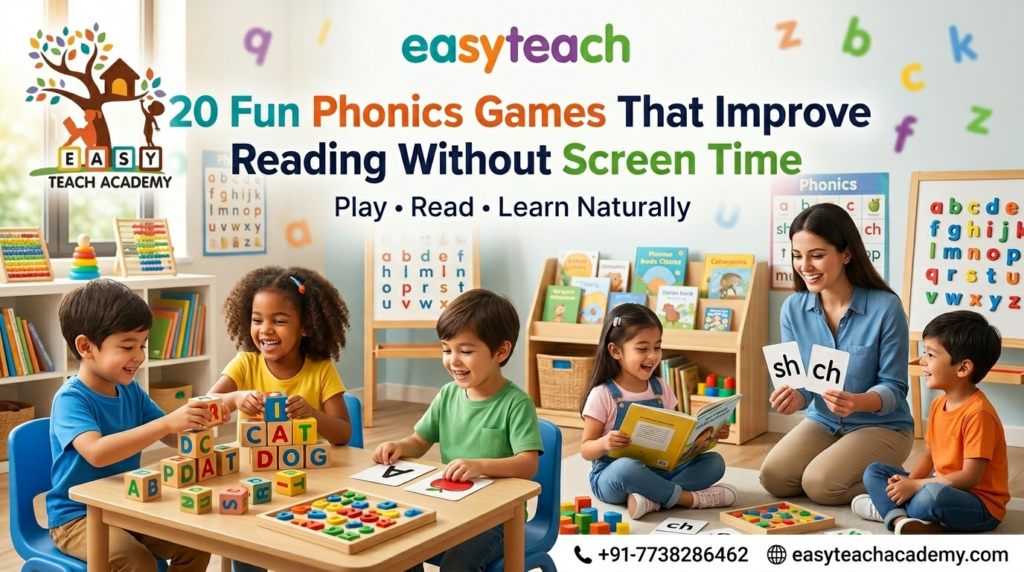
A parent and child sitting at a dining table practicing phonics together. The child is matching letter cards to picture cards while smiling. Around them are colorful learning materials, alphabet cards, books, and sound games. Bright home-learning environment, educational illustration, warm family atmosphere, child-friendly style, landscape format, suitable for a phonics blog.
Mistake 11: Skipping Sound Blending Practice
Many parents focus on individual sounds but not blending.
Example:
Children know:
/c/
/a/
/t/
But cannot combine them into:
cat
How to Fix It
Practice blending regularly.
Stretch sounds slowly:
/mmmm/ /aaa/ /p/
map
Blending develops reading fluency.
Mistake 12: Expecting Instant Results
Reading development takes time.
Parents sometimes become discouraged after only a few weeks.
Reality
Reading growth occurs gradually.
Small improvements accumulate over months.
How to Fix It
Track progress over longer periods.
Notice improvements in:
- confidence
- speed
- accuracy
- comprehension
Mistake 13: Using Only One Teaching Method
Children learn differently.
One child may enjoy stories.
Another may prefer games.
Another may benefit from movement.
How to Fix It
Use multiple approaches.
Examples:
- books
- sound cards
- songs
- storytelling
- creative activities
Variety improves engagement.
Mistake 14: Not Understanding Modern Phonics Programs
Many parents learned to read differently from today’s children.
Modern best phonics programs emphasize:
- decoding
- sound awareness
- blending
- systematic instruction
How to Fix It
Become familiar with your child’s phonics approach.
Consistency between school and home improves results.
Mistake 15: Forgetting That Reading Should Be Enjoyable
Perhaps the biggest mistake is turning reading into a daily battle.
Children who associate reading with stress may avoid books altogether.
How to Fix It
Create positive reading experiences.
Examples:
- family reading time
- story nights
- word challenges
- reward charts
- creative storytelling
Enjoyment encourages lifelong reading habits.
Understanding Fast Phonics Learning
Many parents search for Fast Phonics resources because they want quicker results.
While structured instruction can accelerate progress, there are no genuine shortcuts.
Successful reading development requires:
- practice
- repetition
- patience
- consistency
The goal is lasting understanding rather than temporary memorization.
How to Choose Among the Best Phonics Programs
Parents often compare different phonics programs before enrolling their children.
Strong programs usually include:
- systematic instruction
- decoding practice
- blending exercises
- reading opportunities
- progress tracking
The best phonics programs focus on building independent readers rather than teaching children to memorize words.
What Parents Should Know About Hooked on Phonics
Many families research:
- Hooked on Phonics Reading
- Hooked on Phonics Cost
- Hooked on Phonics Price
- Hooked on Phonics Online
These programs remain popular because they provide structured reading instruction.
However, regardless of the program chosen, parental involvement remains one of the strongest predictors of reading success.
No program can completely replace encouragement, conversation, and daily reading practice.
Are Phonics Games Online Helpful?
Many children enjoy phonics games online because they provide immediate feedback and interactive learning.
When used appropriately, online games can support:
- sound recognition
- spelling
- decoding
- vocabulary development
However, online games work best when combined with:
- books
- conversations
- writing activities
- hands-on practice
Balance is key.
Supporting Phonics for Kindergarten Learners
Children beginning phonics for kindergarten often benefit from playful and engaging learning experiences.
Examples include:
Sound Sorting
Grouping objects by beginning sounds.
Word Building
Creating simple words with magnetic letters.
Story Discussions
Talking about characters and events.
Picture Sequencing
Arranging story events in order.
These activities build foundational literacy skills naturally.
Signs Your Child May Need Additional Phonics Support
Watch for signs such as:
- difficulty remembering sounds
- frequent guessing
- avoidance of reading
- slow progress
- frustration during reading
Early intervention can prevent small challenges from becoming larger difficulties.
Frequently Asked Questions
What is the most common phonics mistake parents make?
Teaching letter names without emphasizing letter sounds is one of the most common mistakes.
Should parents correct every reading error?
No. Giving children time to self-correct often builds independence.
How long should phonics practice last?
Short, consistent sessions usually work better than lengthy practice periods.
Are online phonics games useful?
Yes, when combined with reading, discussion, and hands-on activities.
What age should phonics instruction begin?
Many children begin developing phonics awareness during preschool and continue through kindergarten and primary school.
Final Thoughts
Supporting reading development at home can be incredibly rewarding. By avoiding these common phonics mistakes, parents can create a positive learning environment that encourages confidence, curiosity, and long-term reading success.
Remember that successful phonics learning is not about perfection. It is about consistent support, meaningful practice, and helping children understand how sounds and words work together.
Small improvements today can lead to significant reading growth in the future.
Help Your Child Become a Confident Reader
Easy Teach Academy offers engaging online phonics instruction designed to strengthen decoding skills, build confidence, and support long-term literacy development.
🌐 Website:
https://easyteachacademy.com/
📚 Learn More:
https://easyteachacademy.com/best-online-phonics-classes-for-kids-and-adults/
📞 Phone/WhatsApp:
+91-7738286462
Book a trial lesson today and discover how expert phonics instruction can support your child’s reading journey.